Claude Code Engineering: Multi-Agent PR Review Architecture
With daily changes in Anthropic's monorepo scaling from 2,500 to over 30,000 commits per day, the Claude Code engineering team built a seven-layer multi-agent verification pipeline that doubled merged PR velocity while cutting reverts by over 40%.
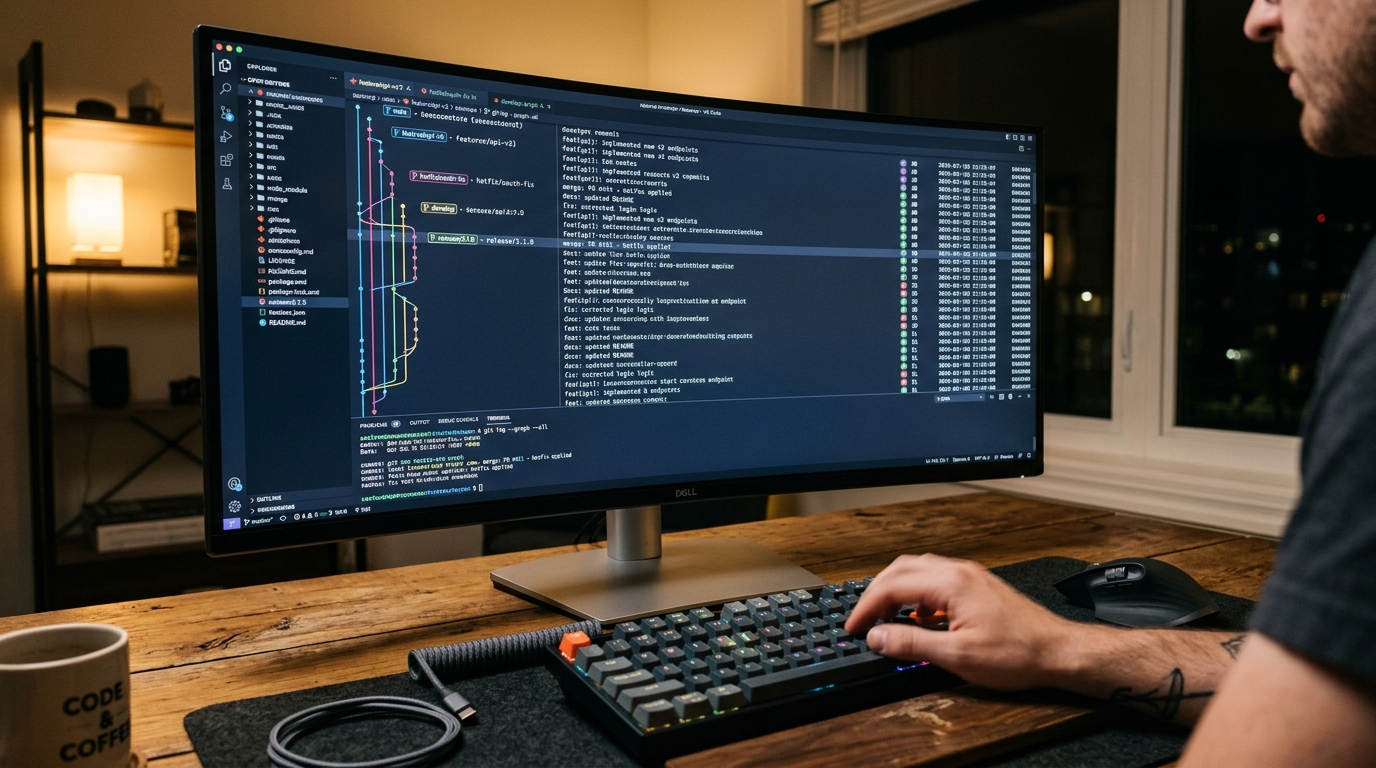
With Claude authoring roughly 90 percent of Claude Code's own repository and daily changes across Anthropic's monorepo accelerating from 2,500 in May to more than 30,000 in September 2026, traditional line-by-line human code review became an unsustainable bottleneck. In an engineering breakdown published by Addy Osmani, Morgan Westlee Lunt, and Qing Wang, the Claude Code team detailed how they redesigned review around human attention conservation.
Seven-Layer Verification and Parallel Verifier Voting
Between June and September 2026, merged pull requests in the Claude Code codebase more than doubled while the revert rate dropped by more than 40 percent. Rather than treating code review as a single blocking gate at the end of development, verification begins locally before a PR exists: the coding agent executes builds, tests, and UI comparisons, followed by a fresh-context subagent diff audit governed by repository-specific CLAUDE.md and REVIEW.md contracts.
On every pull request, multiple bug-hunting agents inspect the diff in parallel against the entire repository, while a secondary quorum of verifier agents votes on each candidate issue to filter out stylistic noise. Deploying this multi-agent architecture raised the share of internal PRs receiving substantive review findings from 16% to 54%.
Enforcing Review Convergence and Risk-Tiered Human Approvals
Early deployments revealed that an agent author and an agent reviewer could trap each other in infinite revision loops, with one CLI pull request cycling through more than 50 overnight rounds after git blame showed 59% of flagged lines pre-dated the PR. The engineering team introduced strict convergence controls alongside automated risk classifiers:
- Single-round review pass rates climbed from 65% to 78% after introducing a 3-round escalation cap and diff-only re-reviews
- Pull requests requiring five or more review rounds plummeted from 8.9% to 1.5%, reducing mean reviews-to-pass from 2.08 to 1.32
- Automated risk classifiers assign changes to Low (zero human approvals once CI, bug, and security reviews pass), Medium (one human), or High (two humans for billing, installers, and CI workflows)
- Every production revert or incident is converted into an expert-labeled test case scored against the AI reviewer in daily evaluation runs
“We think 'did a human read the code?' is an imprecise proxy for 'what could go wrong with this change, and which check, automated or human, is the right one to catch it?'”
References & Primary Sources
Related Analysis & Context
VoidZero & Cloudflare: Open-Source Void Vite Platform
Following VoidZero joining Cloudflare, Christoph Nakazawa and Michael Dong have open-sourced Void, a full-stack Vite deployment platform, zero-config SDK, and CLI built natively on Cloudflare Workers for Platforms, D1, and R2.
Claude & Cryptography: 25-Year NIST ECDSA Seed Mystery Solved
In under 30 minutes, an internal Claude research model solved the 25-year cryptographic mystery behind the NSA-generated NIST elliptic curve seeds (P-192 through P-521), proving they were produced by 1990s C library lrand48 calls seeded with Unix timestamps between May 1997 and April 1998.
Anthropic & METR: Embedded White-Box AI Safety Audits
Anthropic has onboarded six researchers from nonprofit evaluator METR with corporate laptops, dedicated office space, and internal tool access under an enforceable model audit framework with zero publication veto.