Inside Meta Prometheus: The Gigawatt-Scale Supercluster Scaling to 1M GPUs
Engineering at Meta has published the technical blueprint for its gigawatt-scale Prometheus supercluster in New Albany, Ohio, engineered to interconnect up to 1 million NVIDIA GB200/GB300 GPUs with 51.2T RoCE fabrics, >85% training goodput, and Dynamo Dimmer grid stabilization.
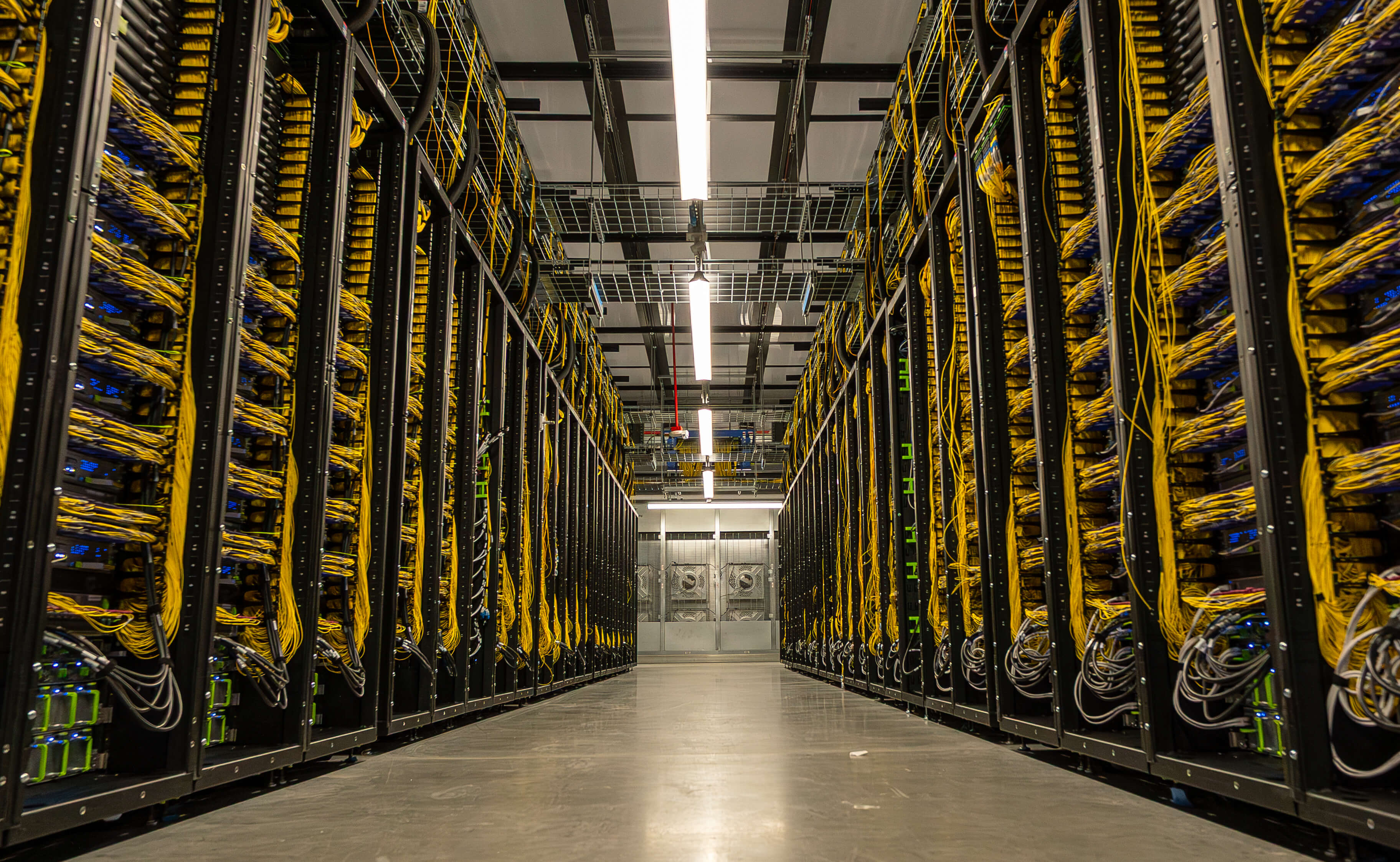
Engineering at Meta has publicly disclosed the comprehensive architectural specifications for 'Prometheus', its flagship gigawatt-scale artificial intelligence supercluster situated in New Albany, Ohio. The multi-campus installation represents the primary training facility behind Meta's next-generation open frontier models, including the Muse architecture family and the frontier reasoning engine Muse Wonder.
The New Albany site—which operated two years ago as a standard web tier data center—has completed its first operational deployment phase. Prometheus currently runs hundreds of thousands of synchronized GPU accelerators distributed across adjacent purpose-built halls and rapid-deployment facilities, engineered along an infrastructure runway that expands toward 1 million active GPUs operating as a unified compute fabric.
Tri-Generation Hardware Platforms: Catalina, Clemente, and San Miguel
The physical compute footprint of Prometheus is built entirely upon dense, liquid-cooled NVIDIA server infrastructure across three progressive platform tiers:
- Catalina Platform: NVIDIA GB200 NVL72 racks integrating 72 Blackwell GPUs with 13.4 Terabytes of unified HBM3e high-bandwidth memory per rack frame.
- Clemente Platform: Next-generation NVIDIA GB300 NVL72 enclosures elevating memory density to 20.7 Terabytes of HBM3e per rack to support ultra-wide tensor model parallelization.
- San Miguel Platform: Future-proofed compute frames designed for NVIDIA's upcoming Vera Rubin NVL72 architecture, slated for immediate integration in ongoing campus expansions.
51.2T RoCE Network Fabric & Backend Aggregation (BAG)
To interconnect hundreds of thousands of GPUs without standard vendor lock-in, Meta standardized on an open RoCEv2 (RDMA over Converged Ethernet) fabric rather than proprietary InfiniBand. Within each hall, non-blocking leaf-spine fabrics cluster up to 20,736 GPUs utilizing state-of-the-art 51.2 Tbps merchant silicon switches.
To bridge workloads across multiple physical campus structures separated by distances ranging from 2 kilometers to over 100 kilometers, Meta engineered an inter-facility aggregation layer termed Backend Aggregation (BAG), preserving near-zero latency penalty during distributed all-to-all collective communications.
Production Reliability: 54,000 GPU-Hour MTBI and >85% Training Goodput
At cluster scales exceeding hundreds of thousands of accelerators, operational success is governed entirely by system reliability. Meta reported that training 'Goodput'—the ratio of active training time generating valid gradient updates without being wiped out by infrastructure faults—surpasses 85% for foundational pre-training and exceeds 90% during reinforcement learning runs on Muse Wonder.
Mean Time Between Interruptions (MTBI) increased from 47,000 GPU-hours to more than 54,000 GPU-hours following collaborative firmware optimizations with on-site NVIDIA resident engineers. Fault frequency plummeted 99% from mid-2025 peak failure rates of nearly 1,000 incidents per 8,000 GPUs per day down to a target of just 2 incidents daily.
Managing 30–40% Instantaneous Grid Power Swings with 'Dynamo Dimmer'
Synchronous training on massive accelerator arrays induces severe physical power fluctuations: collective barriers and computational handoffs trigger sudden 30% to 40% drops and spikes in electrical demand (tens of megawatts within milliseconds), threatening local utility transmission grids.
To prevent catastrophic grid trips, Meta engineers deployed proprietary 'Dynamo Dimmer' orchestration software. The system proactively throttles clock frequencies and smooths ramp rates, working in tandem with high-rate capacitor banks, in-rack battery backup units (BBUs), and automated telemetry integration with municipal power operators.
- Meta Prometheus supercluster completes Phase 1 in New Albany, Ohio, scaling along a path to 1 million GPUs
- Leverages liquid-cooled Catalina (GB200), Clemente (GB300), and San Miguel (Vera Rubin) server platforms
- 51.2T RoCE Ethernet connects 20,736 GPUs per pod, linked via Backend Aggregation (BAG) optical backbones
- Achieves >85% goodput on pre-training and >90% on reinforcement learning for Muse Wonder models
- Fault tolerance design: 64 GPUs active per 72-GPU rack with 8 hot spares and a 2% rack-level buffer
- Stabilizes multi-megawatt power swings via custom Dynamo Dimmer control loops and in-rack battery buffers
“At gigawatt scale, the laws of data center physics take precedence over algorithmic design. Frontier model dominance is no longer won merely by buying compute, but by mastering power-ramp dynamics, firmware resiliency, and fault isolation under continuous load.”
The operational blueprint of Prometheus establishes Meta not only as an unprecedented buyer of silicon, but as a defining benchmark for high-reliability hyperscale infrastructure in the multi-gigawatt era.
References & Primary Sources
Related Analysis & Context
Meta Muse Spark Open: 816B Model on Apple M5 Ultra
Meta has launched the open weights for Muse Spark Open, featuring an 816B MoE parameter footprint, a 1M token context window, and native local execution on desktop Apple M5 Ultra Mac Studios using the MLX framework.
OpenAI Accelerates $30B Fundraising at >$1.4T Valuation Ahead of Anthropic IPO
OpenAI is reportedly rushing to lock in a new $30 billion funding round at a valuation surpassing $1.4 trillion to capture institutional capital commitments before Anthropic's planned mid-November IPO.
MiniMax Launches M3.1 Flash: High-Speed Agentic Model Slashing Costs by 70%
Chinese AI lab MiniMax has debuted M3.1 Flash, an ultra-fast foundation model engineered for agentic loops, coding workflows, and computer use, delivering 3x faster inference throughput, 70% lower operational costs, and an upcoming open-weights release.