Siemens and Nvidia Deploy Industrial AI at Erlangen Factory: Digital Twins Cut Engineering by 85%
Siemens and Nvidia have showcased production-grade industrial AI and digital twin deployments at the Erlangen Electronics Factory in Germany, slashing engineering setup times by 85% backed by a €500M investment targeting 80% automation by 2030.
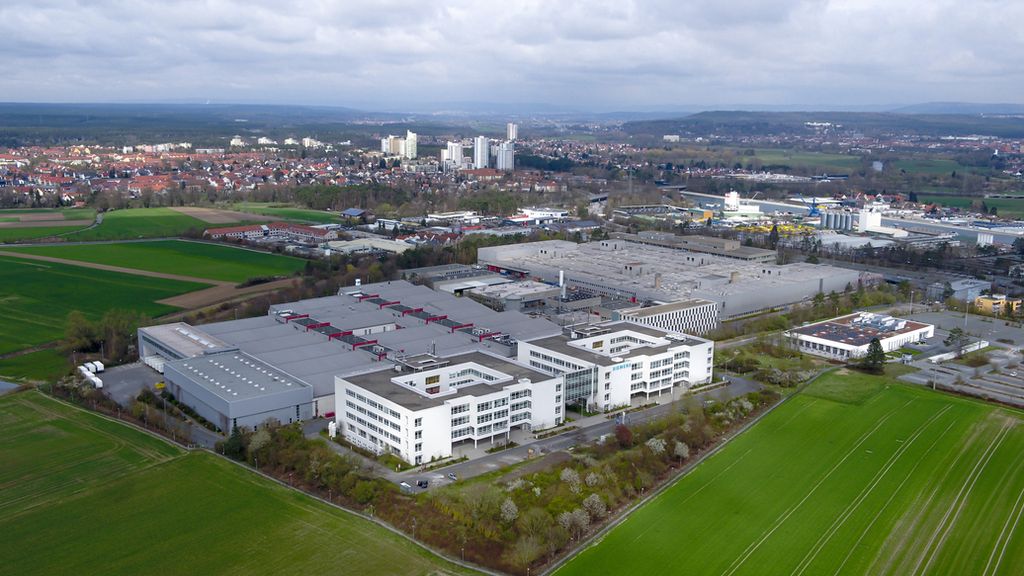
German industrial engineering conglomerate Siemens alongside NVIDIA has demonstrated full-scale operational deployments of industrial artificial intelligence and digital twins operating 24/7 at the Siemens Electronics Factory in Erlangen, Germany. The collaboration bridges Siemens' industrial automation software with NVIDIA Omniverse digital twins and accelerated computing to optimize real-world shop floors bound by strict physical tolerances.
Unlike consumer generative AI applications, the Erlangen deployment integrates machine learning directly with sub-millimeter robotics, material staging schedules, and zero-defect quality thresholds. Backing the initiative, Siemens announced a €500 million capital investment to expand the Erlangen campus through 2030, targeting a dramatic increase in shop-floor automation from 30–40% today up to 70–80%.
Synthetic PCB Quality Inspection: Slashing Engineering Overhead by 85%
A primary engineering breakthrough demonstrated at Erlangen centers on automated optical quality inspection for Printed Circuit Boards (PCBs). Traditionally, manufacturing engineers waited for physical prototypes to exit early production runs before capturing training imagery and configuring automated defect-detection cameras.
Leveraging generative Omniverse digital twins, Siemens now renders photorealistic synthetic assemblies directly from engineering CAD schematics. Computer vision models are trained and calibrated on synthetic defect distributions weeks before physical hardware arrives on the assembly line. Siemens verified that this synthetic pipeline reduces engineering configuration overhead by 85% while compressing product time-to-market by 40%.
Agentic Production Orchestration via Digital Twin Verification
A second core deployment involves agentic production scheduling. When dynamic order priority shifts or supply chain component delays occur, autonomous AI agents evaluate thousands of line reconfigurations in real-time, balancing machine utilization against power consumption and delivery milestones.
Crucially, proposed schedules are simulated inside the factory's digital twin before dispatching instructions to programmable logic controllers (PLCs) and robotic arms. The virtual replica acts as a deterministic verification sandbox, preventing conveyor jams and mechanical collisions while delivering verified operational cost reductions of up to 20%.
Scaling Production: Over 100 AI Algorithms in Active Production
The Erlangen site currently hosts more than 100 active production AI algorithms spanning automated guided vehicle (AGV) logistics, solder-paste inspection, and predictive mechanical maintenance. The milestone demonstrates that enterprise value in industrial AI is achieved when advanced neural models are coupled with physical process simulation.
- Siemens and NVIDIA operationalize advanced industrial AI at the Erlangen Electronics Factory in Germany
- Synthetic digital twin rendering cuts PCB visual inspection engineering effort by 85% and time-to-market by 40%
- Agentic production scheduling validated inside digital twin sandboxes to eliminate operational risk
- More than 100 custom AI algorithms actively operating across assembly, logistics, and quality assurance
- Backed by a €500M campus expansion targeting 70–80% factory automation by 2030 (up from 30–40%)
- Core architecture principle: simulation sandboxes provide the indispensable safety layer for physical AI execution
“On an industrial assembly line, algorithmic hallucinations are unacceptable. Digital twins provide the deterministic sandbox that empowers autonomous agents to optimize manufacturing velocity without imperiling physical uptime.”
The operational results at Erlangen illustrate the broader trajectory of industrial AI, transitioning from speculative research demonstrations into certified, high-efficiency factory automation backbones.
References & Primary Sources
Related Analysis & Context
Neocloud Shakeout Looms: Executives Predict Only 7–10 of Hundreds Will Survive
Industry executives forecast a brutal consolidation across the AI GPU cloud sector that could leave only 7 to 10 independent survivors out of hundreds of neoclouds, placing intense scrutiny on debt-fueled balance sheets and Nvidia's $20B lease backstop.
Industrial AI Startup Syncrowin Bags $3M Pre-Seed to Prevent Costly Factory Breakdowns
Australian industrial AI venture Syncrowin has raised a $3 million pre-seed round led by Collide Capital to build an equipment-health platform that integrates mechanical sensor telemetry, time-series anomaly detection, and enterprise maintenance logs.
Waymo Aggressively Scales Robotaxi Fleet Toward 20,000 Vehicles by 2027
Alphabet's autonomous driving unit Waymo is targeting an aggressive fivefold fleet expansion from 4,000 to 20,000 commercial robotaxis by year-end 2027, vastly outpacing Wall Street forecasts backed by a $5B debt facility.