LSTC, Fujifilm, and Rapidus Consortium Unveils 2nm Edge-AI Medical Imaging Architecture: 10x Efficiency Over Datacenter GPUs
Under Japan's NEDO post-5G initiative, a consortium including LSTC, Fujifilm, Hokkaido University, and Rapidus is designing dedicated 2nm AI accelerator silicon to execute clinical CT, endoscopic, and ultrasound reconstructions on-device with sub-10ms latency.
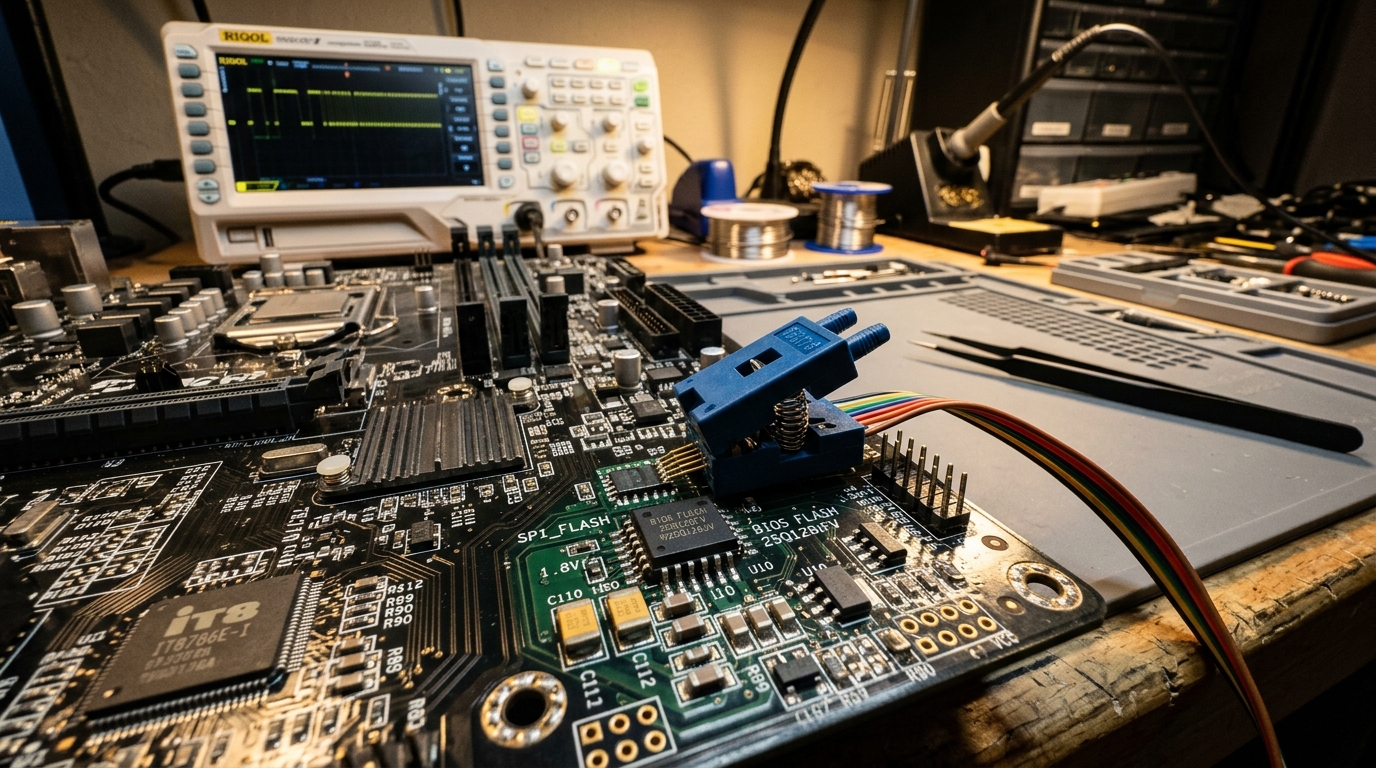
On October 21, 2026, Japan's Leading-edge Semiconductor Technology Center (LSTC), Fujifilm Corporation, Hokkaido University, GE HealthCare Japan, and Belgium’s imec announced an ambitious collaborative initiative to build next-generation edge-AI medical imaging architectures powered by 2-nanometer application-specific integrated circuits (ASICs). The project has been selected under the post-5G semiconductor development framework of Japan’s New Energy and Industrial Technology Development Organization (NEDO).
The consortium directly addresses a mounting computational bottleneck in clinical environments: the exponential growth in diagnostic visual models clashing against rigid hospital power envelopes and high-latency public cloud pipelines.
Decentralizing Heavy Diagnostic Inference to On-Device 2nm GAA Silicon
Volumetric medical diagnostic workloads—such as iterative computed tomography (CT) reconstruction, real-time ultrasound elastography, and 4K surgical endoscopic image synthesis—have historically required offloading massive raw data streams to remote datacenter GPU clusters. This paradigm introduces unacceptable network jitter, high operational bandwidth costs, and stringent data sovereign compliance hurdles under hospital privacy mandates.
The LSTC-led architecture leverages 2nm Gate-All-Around (GAA) process technology slated for production at Rapidus's IIM-1 foundry in Chitose, Hokkaido. By embedding low-latency tensor acceleration directly into localized clinical hardware operating beneath a 15-watt thermal envelope, the consortium targets a 5-fold surge in image reconstruction throughput and a greater than 10-fold reduction in energy expenditure compared to contemporary enterprise GPU solutions.
- On-device 2nm GAAFET ASIC integration tailored for deterministic clinical tensor workloads
- Minimum 5x speedup in real-time volumetric CT and ultrasound slice processing throughput
- Over 10x improvement in energy efficiency within a sub-15W device thermal envelope
- Local data processing eliminates off-premises cloud exposure, preserving strict medical confidentiality
Synergizing Clinical Algorithms with Advanced Packaging and Silicon Design
Under the joint roadmap, Fujifilm leads the optimization of neural image restoration networks and multi-modal clinical algorithms, while Hokkaido University spearheads diagnostic accuracy validation. LSTC directs the register-transfer level (RTL) semiconductor architecture, integrating imec's design-technology co-optimization (DTCO) methodologies to map dense matrix multiplication pipelines directly onto 2nm physical macros.
“Clinical artificial intelligence cannot tolerate network round-trip delays when surgical decisions require millisecond responsiveness. Moving state-of-the-art vision models from power-hungry cloud server racks directly onto bedside silicon defines the next frontier of medical instrumentation.”
This venture represents a critical commercial validation vehicle for Rapidus and Japan's advanced semiconductor resurgence strategy. By proving 2nm GAA silicon viability in high-reliability, zero-fault tolerance medical environments, the consortium establishes a compelling alternative to hyperscaler cloud dependencies.
References & Primary Sources
- NEDO Official Project Selection Notice: Advanced Semiconductor Technologies for Post-5G Information Systems
- Fujifilm Holdings Corporate Release: Development of Next-Generation Edge-AI Medical Imaging System with LSTC and Rapidus
- Leading-edge Semiconductor Technology Center (LSTC) 2nm Architecture Roadmap Bulletin
Related Analysis & Context
Neolix Secures $400M Series E Led by Boyu and Alibaba to Scale Autonomous Delivery Robovans to 150,000 Units
Beijing-based autonomous delivery vehicle maker Neolix raised $400 million in Series E funding backed by Boyu Capital and Alibaba's AEF NextGen Fund, driving expansion of its robovan fleet from 30,000 to 150,000 units by 2027.
Waymo Aggressively Scales Robotaxi Fleet Toward 20,000 Vehicles by 2027
Alphabet's autonomous driving unit Waymo is targeting an aggressive fivefold fleet expansion from 4,000 to 20,000 commercial robotaxis by year-end 2027, vastly outpacing Wall Street forecasts backed by a $5B debt facility.
Siemens and Nvidia Deploy Industrial AI at Erlangen Factory: Digital Twins Cut Engineering by 85%
Siemens and Nvidia have showcased production-grade industrial AI and digital twin deployments at the Erlangen Electronics Factory in Germany, slashing engineering setup times by 85% backed by a €500M investment targeting 80% automation by 2030.